


Key takeaways:
- Pony.ai will now be able to operate its robotaxis in the Shenzhen mainland, becoming the first company to do so.
- The approval was jointly granted to Pony.ai and the Xihu Group, which formed a collaboration in June 2025.
- The Chinese robotaxi market is projected to grow by 200× between 2025 and 2030, driven by falling operational and capital expenditure (CapEx) costs alongside rising revenues.
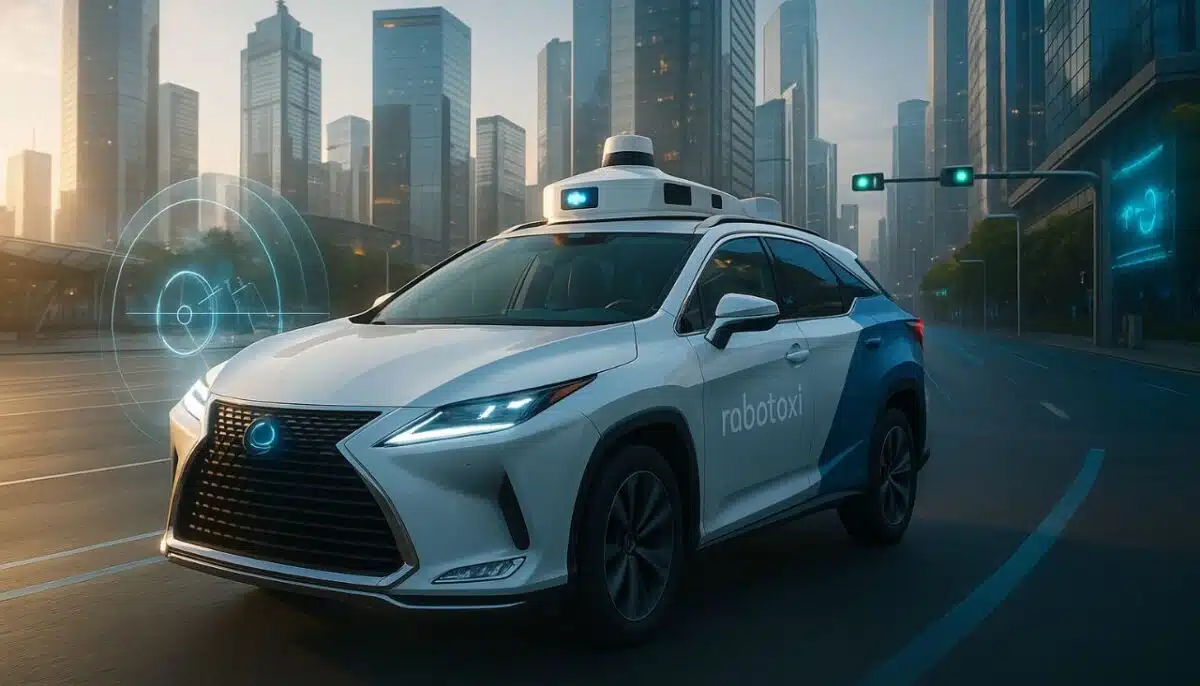
Pony.ai, one of China’s leading autonomous driving companies, has become the first to receive a city-wide operation permit for robotaxi services in Shenzhen.
The approval grants access to an expansive 2,000-square-kilometer area, home to 17.8M residents, marking a major step forward for large-scale autonomous mobility in China.
The permit was jointly issued to Pony.ai and Xihu Group, Shenzhen’s largest traditional taxi operator. The two companies formed a strategic partnership in June 2025, aiming to deploy 1,000 Gen-7 Pony.ai robotaxis across the city over the coming years.
Until now, autonomous taxis in China have been limited to small pilot zones, often confined to suburban districts. The new license allows Pony.ai to operate in dense urban and residential areas, beginning with Nanshan, Qianhai, and Bao’an, before expanding city-wide.
China’s Robotaxi Market
China’s autonomous driving ecosystem is evolving rapidly. Robotaxi services now operate in more than 10 cities, with fully driverless deployments already live in Beijing, Shanghai, Wuhan, Chongqing, and Guangzhou.
Market Size
According to Goldman Sachs, China’s robotaxi market is projected to grow from $54 million in 2025 to nearly $12 billion by 2030, a staggering 200-fold increase.
The total fleet is projected to expand to 500,000 vehicles by 2030 and 1.9 million by 2035, led by major players such as Pony.ai, WeRide, and Baidu Apollo.
While robotaxis currently make up less than 1% of China’s mobility fleet, Goldman forecasts that figure to rise to 9% by 2030 and up to 25% by 2035. With regulators now approving city-wide operation permits — such as the one issued to Pony.ai in Shenzhen — those projections seem increasingly realistic.
Cost of Operations
Operational efficiency is improving just as quickly. Pony.ai’s 7th-generation robotaxis have already reduced the bill of materials by 70%, autonomous driving computational costs by 80%, and LiDAR expenses by 68%.
Baidu’s Apollo Go Gen-6 model costs just $29,000, roughly 60% cheaper than its predecessor.
Overall vehicle costs (including the base model and autonomous driving kit (ADK)) are expected to fall from $44,000 today to $35,000 by 2030 and $32,000 by 2035. As production scales up, economies of scale should continue to drive costs lower.
So, as the scale of operations grow, economies of scale are expected to kick in and result in large scale cost reductions in the next decade.
Revenue
Goldman’s report also suggests the economics will become more attractive over time. Each robotaxi could generate around $69 per day by 2035, up from $36 today, outpacing traditional taxis that earn $28–56 per day.
By 2035, annual revenue per vehicle is expected to reach $31,000 in Tier 1 cities and $22,000 in Tier 2 cities. Pony.ai currently handles around 15 rides per day, a figure expected to rise to 29, 22, and 21 rides across Tier 1, Tier 2, and Tier 3 cities, respectively, by 2035.
The US vs China Robotaxi Scenario
The robotaxi competition between the US and China has been intensifying, with both sides engaging in their own capacity. The Chinese market is relatively mature, featuring multiple players like Baidu Apollo, Pony.ai, AutoX, WeRide, and Didi.

Meanwhile, the US market is currently dominated by Waymo, which averages around 250,000 trips per week across cities such as Los Angeles, Phoenix, Austin, and San Francisco. Other players, such as Tesla, are still in the prototype/demo phase, testing out their indigenous technologies.
Technological Approach
Chinese autonomous vehicles rely more on a multi-sensor stack, which includes cameras, radars, LiDAR, and HD mapping technologies. Waymo, on the other hand, has developed its own LiDAR technology, while Tesla has outright rejected using it in its vehicles.
Tesla has adopted a more vision-first approach with multiple cameras and millions of hours of testing on its massive fleet of customer vehicles.
Now, there’s no right or wrong with the two different technological approaches. However, the use of proven technology that is already available gives Chinese companies a significant head start, which is why they appear to be ahead in the race at present.
These companies can obtain LiDAR from top suppliers, commission chips from Huawei or NVIDIA, and negotiate long-term deals with OEMs to iterate and scale quickly.

The US counterparts believe more in developing their own technologies, which is both time-consuming and capital-intensive. This is something similar we’ve seen with Apple – the company rarely uses market tech. Instead, it spends years and billions developing its own chips, software, and components. No doubt, the result is a benchmark product, but the road to get there is a long one.
Chinese AV companies are fast executors with a focus on optimising costs while assembling the best components.
Government Regulations
Additionally, the regulatory environment in China is more conducive to the rapid development of robotaxis, with the government working proactively to facilitate quick approvals.
In fact, autonomous driving technology was included in the 14th ‘Five-Year Plan for the development of Digital Economy’ in 2022, and in 2023, four ministries were set up to improve road access for AVs and segment promotion.
The US, on the other hand, struggles with hierarchy overlaps, as multiple authorities, including the federal DOT/NHTSA, state DMVs, and city authorities, cause friction in approvals.
For instance, an NHTSA inquiry of a safety concern led to the suspension of Cruise’s permit in California. The US authorities are generally more cautious and conservative, especially in the face of an incident, which ultimately slows down the pace of industry development.
The Future of Robotaxis
With market growth accelerating, costs falling, and unit economics improving, China’s robotaxi sector is entering a profitable new phase.
Yet as capital floods into automation and AI infrastructure, some analysts warn of potential overheating, primarily as companies like OpenAI pursue trillion-dollar loan guarantees to fund their own expansion.
Future designs may eliminate steering wheels, rear-view mirrors, and traditional dashboards. In their place, panoramic windows and roofs could transform into holographic 3D displays, turning rides into immersive entertainment spaces.
AI copilots could assist passengers with route planning, communication, and even productivity on the go.

It sounds ambitious, even a little far-fetched. However, the idea of a pocket-sized device that could make calls, shoot videos, and host video chats was also around back in the 1980s.
For now, most robotaxi operators remain focused on refining their core technologies, including sensors, algorithms, and reliability. Companies like WeRide are already experimenting with innovative designs, such as hidden B-pillars integrated into car doors, hinting at what’s to come.
As the ecosystem evolves, operators will also need to invest in real-time data analysis, AI-driven safety systems, and automated inspections to maintain high public confidence.
The road ahead may be autonomous, but it’s also undeniably human in its ambition.
Our editorial process
The Tech Report editorial policy is centered on providing helpful, accurate content that offers real value to our readers. We only work with experienced writers who have specific knowledge in the topics they cover, including latest developments in technology, software, hardware, and more. Our editorial policy ensures that each topic is researched and curated by our in-house editors. We maintain rigorous journalistic standards, and every article is 100% written by real authors.